• home
  • Bio
  • Core Values
  • News Articles
  • Testimonials
  • Blog
  • Impaired Driving
  • Immediate Roadside Prohibition
  • Domestic Assault
  • Drug Charges
  • Bail Hearing
  • Legal Aid
  • FAQs
  • Steinbach
  • Contact
Menu

Michael Dyck | Criminal Law

Rees Dyck Rogala
Law Offices
(204) 318-6116

Michael Dyck | Criminal Law

  • home
  • about
    • Bio
    • Core Values
    • News Articles
    • Testimonials
  • Blog
  • info
    • Impaired Driving
    • Immediate Roadside Prohibition
    • Domestic Assault
    • Drug Charges
    • Bail Hearing
    • Legal Aid
    • FAQs
  • Steinbach
  • Contact

Fort Richmond Collegiate: May 19, 2017 Presentation

May 19, 2017 Michael Dyck
Michael Dyck Fort Richmond Collegiate

I was invited to come speak to a class at Fort Richmond Collegiate about being a lawyer.

I am offering a contest for any students at the presentation to enter to win a $20 gift card to Tim Hortons, Starbucks, or 7-Eleven. The draw will close on Saturday, May 20th at 5:00 pm.

Comment

Supreme Court of Canada Series: R. v. Oland (Bail Pending Appeal)

March 24, 2017 Michael Dyck
Michael Dyck R. v. Oland Supreme Court of Canada

On March 23, 2017, the Supreme Court of Canada released its unanimous decision in R. v. Oland, 2017 SCC 17. 

This case dealt with the issue of bail pending appeal. Basically, if a person is convicted and sentenced to serve custody (a jail sentence), he or she has the right to apply for bail and be released into the community instead of remaining in custody while the appeal is being decided. Appeals can take months or sometimes years to be completed and if the appeal is successful and the custodial sentence is set aside, it would be unfair that the person would have had to spend that whole time waiting in jail.

In this case, Mr. Oland was convicted for second degree murder. He applied for bail pending his appeal before a single judge of the Court of Appeal and it was denied on the basis of public interest - the judge was not satisfied that public confidence would be maintained in the administration of justice if Mr. Oland was released on bail. Even though the judge found that Mr. Oland posed no danger to the public at large. Mr. Oland appealed that decision to a review panel but the panel of judges decided the bail judge's decision was not unreasonable and there were not any material error of facts, law, or mixed facts and law. Mr. Oland then appealed that decision to the Supreme Court.

Before the Supreme Court heard this appeal about his bail, Mr. Oland's appeal of his conviction was successful and a new trial was ordered. He was then granted bail pending his re-trial. But the Supreme Court proceeded anyway to address this issue because it was an important legal issue and held at para. 28:

Appellate judges continue to have difficulty resolving the tension between enforceability and reviewability, especially in cases like the present one, where they are faced with a serious crime on the one hand, and a strong candidate for bail pending appeal on the other.

The Court also wanted to make it clear about what public confidence means, specifically, who is the public at para 47:

This person is someone who is thoughtful, dispassionate, informed of the circumstances of the case and respectful of society’s fundamental values. In that sense, public confidence in the administration of justice must be distinguished from uninformed public opinion about the case, which has no role to play in the decision to grant bail or not.

The Court commented on how the review panel should act under s. 680(1):

First, absent palpable and overriding error, the review panel must show deference to the judge’s findings of fact. Second, the review panel may intervene and substitute its decision for that of the judge where it is satisfied that the judge erred in law or in principle, and the error was material to the outcome. Third, in the absence of legal error, the review panel may intervene and substitute its decision for that of the judge where it concludes that the decision was clearly unwarranted.

Ultimately, the Supreme Court determined that Mr. Oland ought to have been released on bail pending appeal.

Related articles

  • Supreme Court of Canada Series: R. v. Bingley (DRE Experts) (MichaelDyck.ca)

  • Supreme Court of Canada Series: R. v. Anthony-Cook (Joint Recommendations)(MichaelDyck.ca)

  • Supreme Court of Canada Series: R. v. Jordan (Unreasonable Delay) (MichaelDyck.ca)

  • Supreme Court of Canada Series: R. v. Safarzadeh-Markhali (Pre-Sentence Custody Credit) (MichaelDyck.ca)

  • Supreme Court of Canada Series: R. v. St-Cloud (Tertiary Ground for Bail) (MichaelDyck.ca)

  • Supreme Court of Canada Series: R. v. Nur (Mandatory Minimums for Firearms) (Michael Dyck.ca)

About the author

Michael Dyck is a partner at Rees & Dyck Criminal Defence. He represents clients primarily from Winnipeg, Steinbach, and rural Manitoba. He has extensive experience helping people charged with criminal offences and focuses on building legal strategy with clients. To read more of his articles, please visit his partner's website TomRees.ca.

Tags Supreme Court of Canada, R. v. Oland, bail application, bail pending appeal, criminal law, criminal defence
Comment

Supreme Court of Canada Series: R. v. Bingley (DRE Experts)

February 24, 2017 Michael Dyck
Michael Dyck R. v. Bingley Supreme Court of Canada

On February 23, 2017, the Supreme Court of Canada released its 5-2 majority decision in R. v. Bingley, 2017 SCC 12. 

This is a case about impaired driving by a drug, specifically marijuana and a prescription drug Xanax. First, you will need a bit of a background about drive impaired by drug cases and law in order to understand the issue the Supreme Court addressed.

If the police pull you over while driving or find you in the driver's seat of a motor vehicle and the police reasonably suspect you have a drug or alcohol in your body, then they can demand and force you to complete either a Standardized Field Sobriety Test or to provide a sample into a roadside alcohol screening device called an Approved Screening Device (ASD). If you fail either of these tests, the officer will then place you under arrest for impaired operation and then demand you complete either a Drug Recognition Evaluation or a breathalyzer sample back at the police detachment. But, if the office has reasonable grounds to believe your ability to operate a motor vehicle is impaired, even to a slight degree, because of the effects of a drug or alcohol or both, then the officer will place you under arrest immediately and take you to the police detachment for the Drug Recognition Evaluation or a breathalyzer sample.

Police officers need to take special training to complete Standardized Field Sobriety Tests, ASD tests, Drug Recognition Evaluation tests, or a breathalyzer test so some officers may have training to do some or none of these types of tests. If police officers complete special training for drug evaluations, they can call themselves a "Drug Recognition Expert" (DRE) because that is the term the Criminal Code uses for them.

In court, most of the time, witnesses testify about things that they said, they saw, and they did. In other words, their direct observations. Additionally, opinion evidence can also be provided by witnesses. Some opinion evidence is consider lay opinion, which means anyone can give opinion evidence about these areas. Anyone can testify in court about how old they think someone appeared or how intoxicated they thought someone appeared (these things are not facts but opinions based on observations). Special witnesses can be qualified as expert witnesses and then the expert witness can give expert opinion evidence. For example, if a witness can show they have special training, knowledge, and experience in the area of forensic pathology, then the witness can testify in court about the cause of death in a homocide case.

The case of R. v. Bingley was to determine whether or not a police officer who has training and is a Drug Recognition Expert can testify in court as an expert witness and provide expert opinion evidence or if the court would have to decide whether or not the officer can provide this expert opinion evidence. In other words, is the police officer an actual expert or was that just the name or word used to describe them.

The Supreme Court confirmed that a DRE's opinion is not automatically admissible at trial (at para 11-12). They then turned to whether a DRE could be qualified as an expert using the leading cases in this area: R. v. Mohan, [1994] 2 SCR 9 and White Burgess Langille Inman v. Abbott and Haliburton Co., 2015 SCC 23. And at para. 14 the Court summarized:

The expert evidence analysis is divided into two stages. First, the evidence must meet the four Mohan factors: (1) relevance; (2) necessity; (3) absence of an exclusionary rule; and (4) special expertise. Second, the trial judge must weigh potential risks against the benefits of admitting the evidence: White Burgess, at para. 24.

The issue in this case is whether or not a DRE meets the 4th part of the Mohan test, which is special expertise. Mr. Carson Bingley agreed with the other 3 parts of the Mohan test as well as the admissibility analysis as part of the second stage.

The Supreme Court concluded that a DRE does have special expertise and a voir dire (a trial within a trial) is not necessary to determine if the DRE has special expertise or not, in fact, it would be a waste of time (at para. 27-28). But the Court wanted to ensure that evidence beyond the scope of the DRE testing that the witness provides can be scrutinized at para. 29:

It is important to reiterate a DRE’s s. 254(3.1) determination is a result of administering the prescribed evaluation. That is the only expertise conferred on a DRE. The trial judge has an “ongoing duty to ensure that expert evidence remains within its proper scope”: Sekhon, at para. 46. If opinions beyond the expertise of a DRE are solicited, a Mohan voir dire to establish further expertise may be required.

At the same point, the DRE's evidence does not determine guilt or innocence, but it is "merely one piece of the picture for the judge or jury to consider" (at para. 31). 

Related articles

  • Supreme Court of Canada Series: R. v. Anthony-Cook (Joint Recommendations) (MichaelDyck.ca)
  • Supreme Court of Canada Series: R. v. Jordan (Unreasonable Delay) (MichaelDyck.ca)
  • Supreme Court of Canada Series: R. v. Safarzadeh-Markhali (Pre-Sentence Custody Credit) (MichaelDyck.ca)
  • Supreme Court of Canada Series: R. v. St-Cloud (Tertiary Ground for Bail) (MichaelDyck.ca)
  • Supreme Court of Canada Series: R. v. Nur (Mandatory Minimums for Firearms) (Michael Dyck.ca)
  • Is Marijuana Use Impaired Driving? (MichaelDyck.ca)
  • Maclean's Article Tackles Impaired Driving by Drug Issue (MichaelDyck.ca)

About the author

Michael Dyck is a partner at Rees & Dyck Criminal Defence. He represents clients primarily from Winnipeg, Steinbach, and rural Manitoba. He has extensive experience helping people charged with criminal offences and focuses on building legal strategy with clients. To read more of his articles, please visit his partner's website TomRees.ca.

Tags Supreme Court of Canada, R. v. Bingley, impaired driving law, drive impaired, drug recognition evaluation, marijuana, high driving
Comment

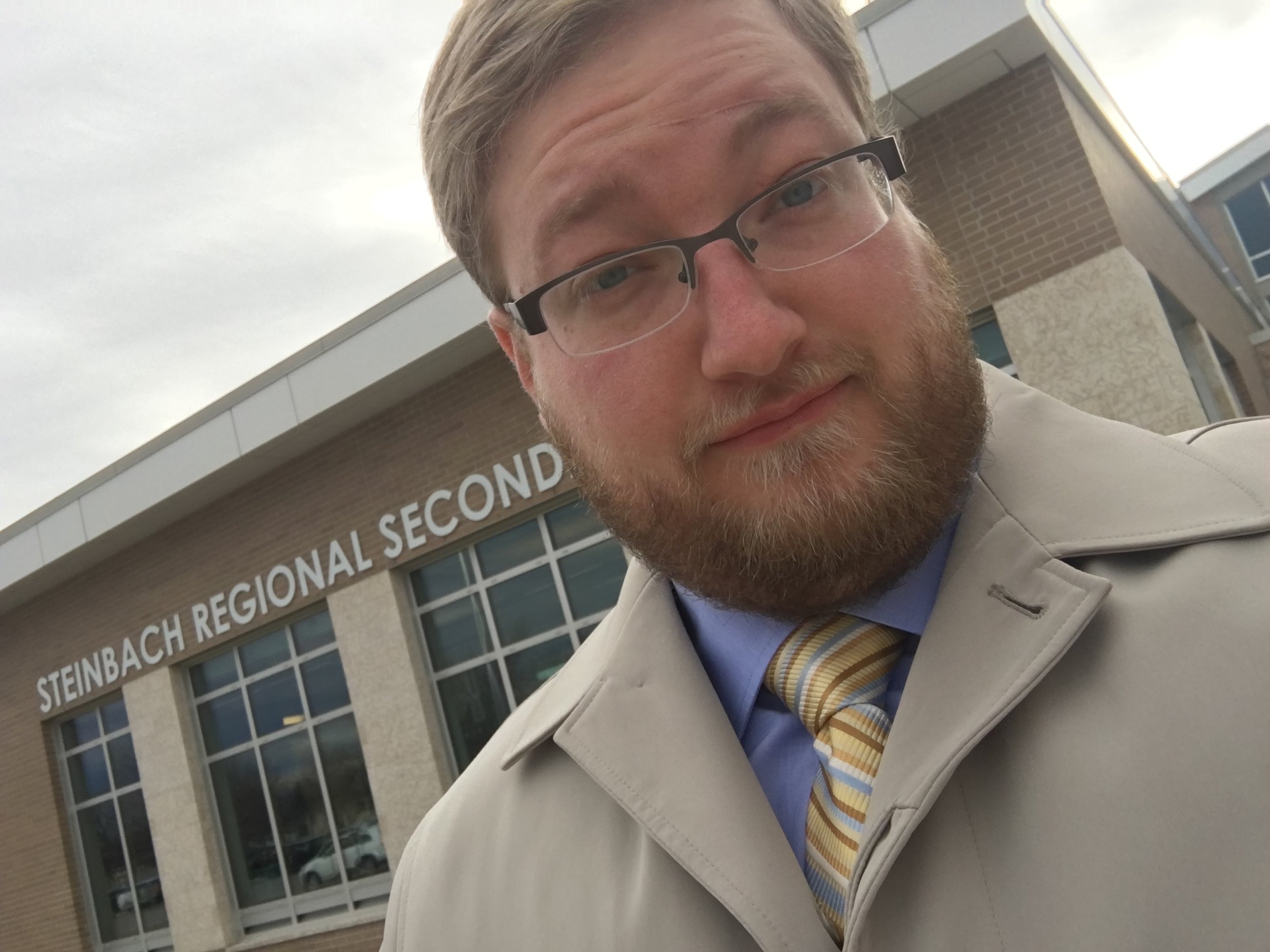
Steinbach Regional Secondary School: November 16, 2016

November 16, 2016 Michael Dyck

I am speaking to the Law classes today at the Steinbach Regional Secondary School. I am going to have a little contest for the kids in the class. The winner will be contacted by email after the contest closes on Saturday, November 19, 2016 at 12:00 noon.

Step 1

Click here to go to the CanLII Connects website if you haven't been there already.

Step 2

Fill out the form below to enter to win a $50 gift card of your choosing (e.g. Tim Hortons, Starbucks, 7-11).

About the author

Michael Dyck is a partner at Rees & Dyck Criminal Defence. He represents clients primarily from Winnipeg, Steinbach, and rural Manitoba. He has extensive experience helping people charged with criminal offences and focuses on building legal strategy with clients. To read more of his articles, please visit his partner's website TomRees.ca.
Tags Steinbach, Steinbach Regional Secondary School, Intermittent Sentence, Possession for the purpose of trafficking, Cocaine, R. v. Kasian
1 Comment

Supreme Court of Canada Series: R. v. Anthony-Cook (Joint Recommendations)

October 24, 2016 Michael Dyck
Michael Dyck Supreme Court of Canada

On October 21, 2016, the Supreme Court of Canada released its unanimous decision R. v. Anthony-Cook, 2016 SCC 43.

The issue in the case was whether or not it was appropriate for the sentencing judge to impose a different sentence than was being recommended by both the Crown Attorney and the defence lawyer. When both lawyer agree on what the punishment should be, it is called a joint recommendation. Joint recommendations help the justice system work more efficiently because an accused person is prepared to plead guilty and save the Crown Attorney the burden of proving the offence at a trial (even if they have a strong case) and in exchange, the accused person gets some sense of certainty about what punishment they will receive. Having said that, there are no guarantees at sentencing, and the sentencing judge always has discretion to impose any fit and appropriate sentence he/she deems.

The Supreme Court outlined what the previous tests used called the fitness test or the public interest test before outlining what the proper test should now be at paragraph 32:

Under the public interest test, a trial judge should not depart from a joint submission on sentence unless the proposed sentence would bring the administration of justice into disrepute or is otherwise contrary to the public interest. 

The Court then outlined some principles for judges to consider when they have concerns about a joint recommendation:

  1. "trial judges should approach the joint submission on an “as-is” basis" (para. 51). So if the joint recommendation did not include a probation order, the judge should not decide to add it. But mandatory orders (like DNA or a weapons ban) can be added even if counsel failed to address them. They are, after all, mandatory.
  2. "trial judges should apply the public interest test when they are considering “jumping” or “undercutting” a joint submission" (para. 52). The same test should apply if the judge is considering imposing a sentence that is higher or something that is lower than the joint recommendation.
  3. "when faced with a contentious joint submission, trial judges will undoubtedly want to know about the circumstances leading to the joint submission — and in particular, any benefits obtained by the Crown or concessions made by the accused" (para. 53). Judges should accept joint recommendations even if they think the sentence may be too light if the Crown Attorney gained more or if the accused lost more.
  4. "the judge should notify counsel that he or she has concerns, and invite further submissions on those concerns, including the possibility of allowing the accused to withdraw his or her guilty plea, as the trial judge did in this case" (para. 58). if the judge is not satisfied with the joint recommendation, he/she must allow both counsel to make further submissions to address the judge's concerns before deciding on the sentence.
  5. "if the trial judge’s concerns about the joint submission are not alleviated, the judge may allow the accused to apply to withdraw his or her guilty plea" (para. 59). This is especially appropriate where both counsel have proposed an illegal or improper sentence.
  6. "trial judges who remain unsatisfied by counsel’s submissions should provide clear and cogent reasons for departing from the joint submission" (para. 60). Clear and articulated reasons will help counsel determine how to proceed in future cases that are similar and is valuable if the case is appealed for the appeal court to review.

Ultimately, the Supreme Court imposed the sentence that was the joint recommendation of the two lawyers after concluding it passed the test for joint recommendations: it would not bring the administration of justice into disrepute and it was not contrary to the public interest.

Manitoba's previous leading case on joint recommendations was R. v. Sinclair, 2004 MBCA 48. Many of the same principles the Supreme Court have laid out are similar to what we had already. But it is interesting to note how the sentencing judge should consider allowing the accused to withdraw a guilty plea if the joint recommendation is not going to be followed. Also, approaching joint recommendations on an "as-is" basis is a slight change, perhaps. Overall, the Supreme Court emphasized the value of joint recommendations to the justice system and how sentencing judges should be careful about when and exactly how to impose a different sentence.

Related articles

  • Supreme Court of Canada Series: R. v. Jordan (Unreasonable Delay) (MichaelDyck.ca)
  • Supreme Court of Canada Series: R. v. Safarzadeh-Markhali (Pre-Sentence Custody Credit) (MichaelDyck.ca)
  • Supreme Court of Canada Series: R. v. St-Cloud (Tertiary Ground for Bail) (MichaelDyck.ca)
  • Supreme Court of Canada Series: R. v. Nur (Mandatory Minimums for Firearms) (Michael Dyck.ca)

About the author

Michael Dyck is a partner at Rees & Dyck Criminal Defence. He represents clients primarily from Winnipeg, Steinbach, and rural Manitoba. He has extensive experience helping people charged with criminal offences and focuses on building legal strategy with clients. To read more of his articles, please visit his partner's website TomRees.ca.

Tags Supreme Court of Canada, Scc, R. v. Anthony-Cook, joint recommendation, withdraw guilty plea, criminal law, criminal defence
1 Comment
← Newer Posts Older Posts →

© Michael Dyck, 2012-2025.  All rights reserved.